Quick Answers
- Diners are increasingly turning to AI to discover restaurants, making it easier to go from recommendation to reservation in a single experience.
- As restaurant discovery evolves, Resy is helping venues stay ahead by making it easier for diners to find, evaluate, and book Resy restaurants through integrations with AI platforms like Claude.
- To improve visibility in AI search results, restaurants should create content that answers real diner questions and ensure their digital information is accurate and consistent across all channels.
The way diners discover restaurants is changing rapidly. For decades, restaurant discovery followed a predictable path: search, scroll, compare, decide, and book. Diners relied on search engines, review sites, and social media to narrow down their options before making a reservation.
Now, that journey is becoming more direct. Instead of searching for a list of venues, diners are asking AI tools to provide them with a single, curated answer. And increasingly, diners expect to complete the booking experience in the same environment, collapsing the discovery pipeline into a single streamlined step.
For restaurants, AI isn’t just a new channel. It’s a shift in how demand is created and captured. That’s why Resy is meeting diners where they are searching by building integrations with AI platforms like Claude to help restaurants reach diners where decisions are increasingly being made.
Agentic AI Is Quickly Becoming a Leading Way for Diners to Find Restaurants
With traditional search, the work of decision making is put on the diner. They enter a query or sift through social media posts, scanning results and then making the final call. But with agentic AI, instead of typing “best Italian restaurant near me,” diners are asking more specific, intent-driven questions:
Where can I find a memorable omakase experience without planning weeks in advance?
I’m meeting friends in the West Village. What’s a spot with good vibes where we can actually hear each other talk?
I’m looking for a restaurant with outdoor seating, great cocktails, and a reservation available after work.
While generative AI is designed to create content, agentic AI is designed to take action. Instead of simply generating a list of restaurants, agentic AI can understand diner preferences, refine recommendations based on context, and guide users all the way through decision-making and booking. As AI tools become more integrated into everyday behavior, they’re starting to act less like search engines and more like digital concierges.
Adoption is already underway. According to Reputation.com, 20% of diners already use AI to look for information about venues, and that number jumps to 40% among Gen Z. Anthropic’s Economic Index report found that users are increasingly delegating tasks to AI assistants rather than simply collaborating with them, with “directive” interactions rising from 27% to 39% over an eight-month period. This suggests a growing willingness to trust AI not only to provide information, but also to help make decisions and complete tasks on users’ behalf.
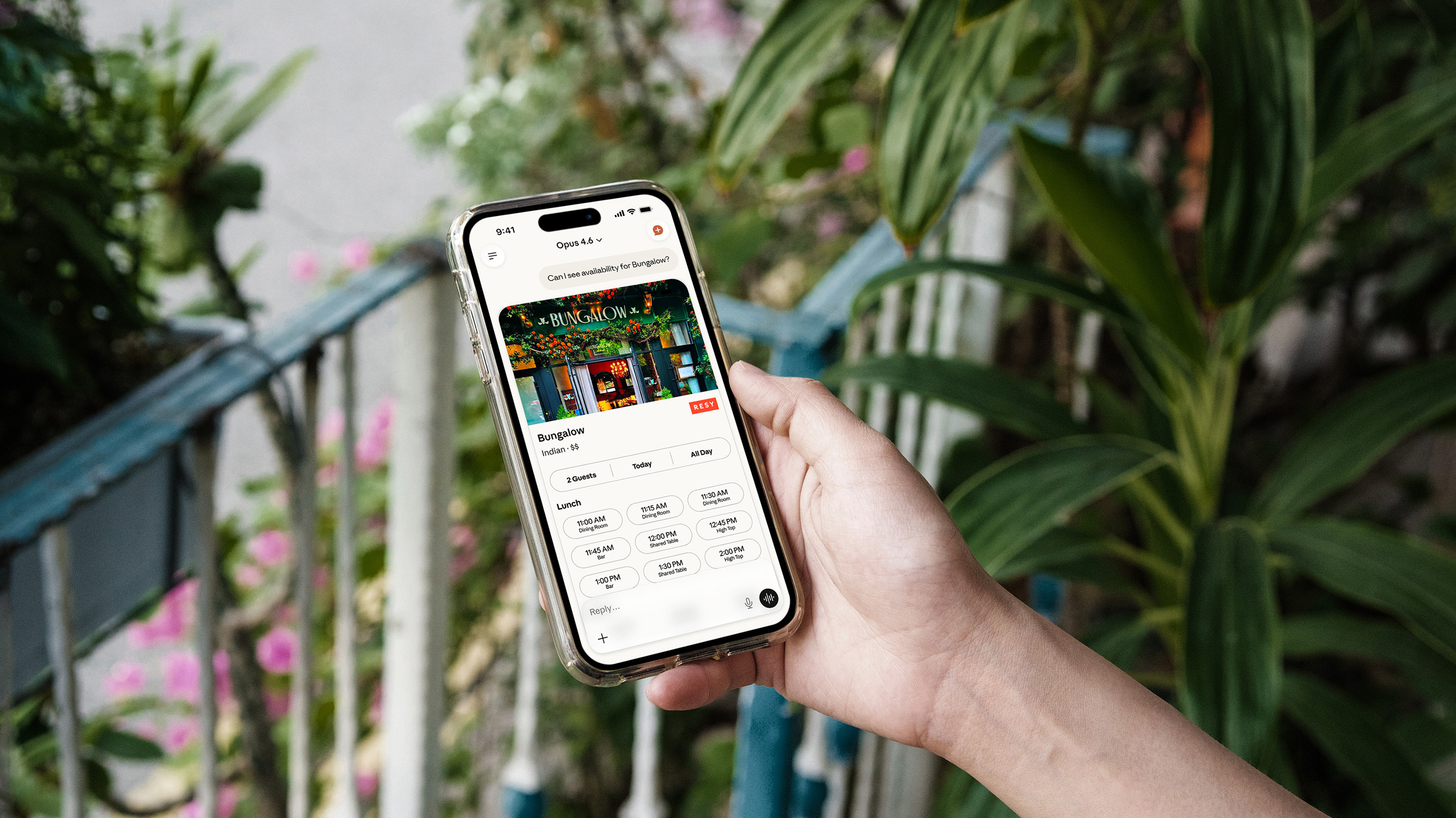
Resy has responded to this shift in discovery habits by launching an integration with Anthropic’s Claude. Diners can explore options, check real-time availability, and complete a booking, all while staying within the Claude environment. For restaurants, this helps extend visibility into high-intent moments without adding operational complexity.
Help Your Restaurant Show Up in AI Search Results
As AI becomes a primary discovery channel, traditional SEO alone is no longer enough. Discovery is shifting from Search Engine Optimization (SEO) to Generative Engine Optimization (GEO) and Answer Engine Optimization (AEO), where visibility depends on whether AI systems can understand, trust, and recommend your restaurant based on your digital footprint. Resy’s integration with Claude is already helping Resy venues get ahead by surfacing availability and venue information in the platform. Here are some additional ways you can optimize your digital content for AI discovery:
1. Make It Easy for AI to Understand Your Restaurant
AI systems prioritize structured, high-quality data. That means your website, menus, and metadata should be consistent and easy to read. Up-to-date menus, accurate hours, and well-defined cuisine types all increase the likelihood of being surfaced in AI responses.
2. Write for Real Diner Questions, Not Search Terms
Diners are no longer searching in fragments like, “Chinese food NYC”. Instead, they’re asking full questions like, “Where should I go tomorrow for Chinese food in New York for 4 people?”. Your content needs to reflect that. FAQs, conversational website copy, and clearly articulated value propositions help AI models match your restaurant or venue to nuanced queries.
3. Keep Your Restaurant’s Information Consistent Everywhere
AI-generated summaries are quickly becoming the new “review sites.” Models synthesize information from across the internet, meaning consistency across platforms like your website, Google Business profile, Resy.com page, and social media pages matters more than ever.
4. Let AI Handle the Busywork, Not the Hospitality
AI can significantly streamline operations like digital marketing, scheduling, and inventory management. However, hospitality is inherently human. Your guest experience, brand voice, and in-person interaction should remain distinctly non-automated.
The most effective operators are using AI to solve friction points outside the dining room, freeing up staff to focus on what matters most: providing stellar hospitality.
AI Search and Discovery Can Help You Bring in New Diners
Restaurant discovery isn’t going away, but it is evolving. Diners are moving from searching to asking. From browsing to deciding faster. And from comparing options to trusting recommendations.
For restaurants, the opportunity is to adapt early: keep your information clear and consistent, understand how diners are expressing intent, and show up where those decisions are being made. Resy’s integration with Claude is helping Resy restaurants get a leg up, but choices that venues make for their digital channels can also make a difference for discoverability in agentic AI channels.
The future of restaurant discovery isn’t just about being found. It’s about being chosen.