Quick Answers
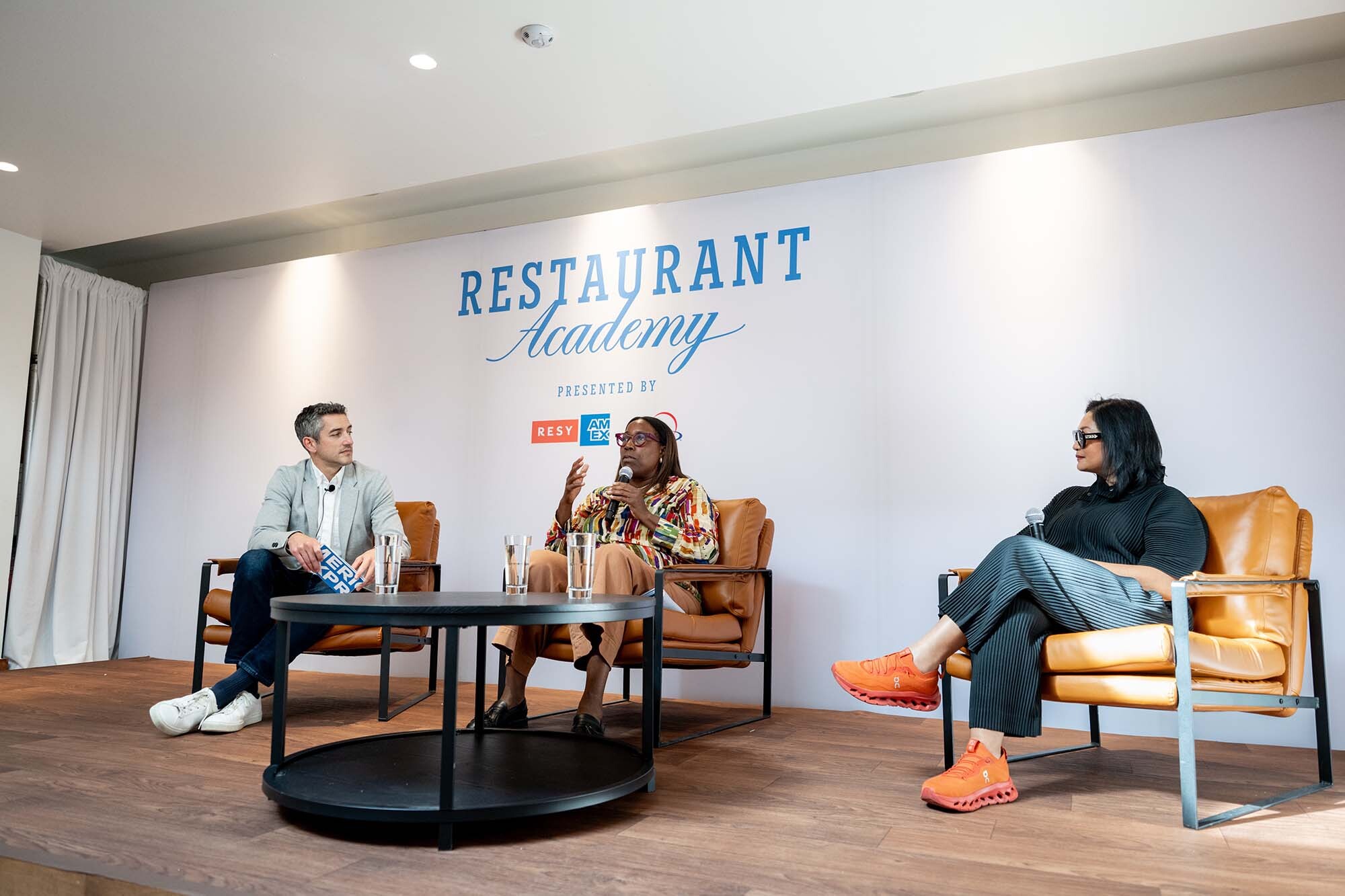
- At Restaurant Academy, a leadership development program from American Express and Resy in partnership with the National Restaurant Association Educational Foundation, chefs Gregory Gourdet, Victoria James, Mashama Bailey, and Nok Suntaranon shared how they lead their teams and run their businesses.
- Their common thread: the guest experience starts with the team, from policies staff can count on, like a “Code Blue” safe word, to promoting from within.
- On the business side, they advised reviewing the numbers weekly, giving managers ownership of the P&L, saving cash and securing good legal counsel, and raising prices when costs rise.
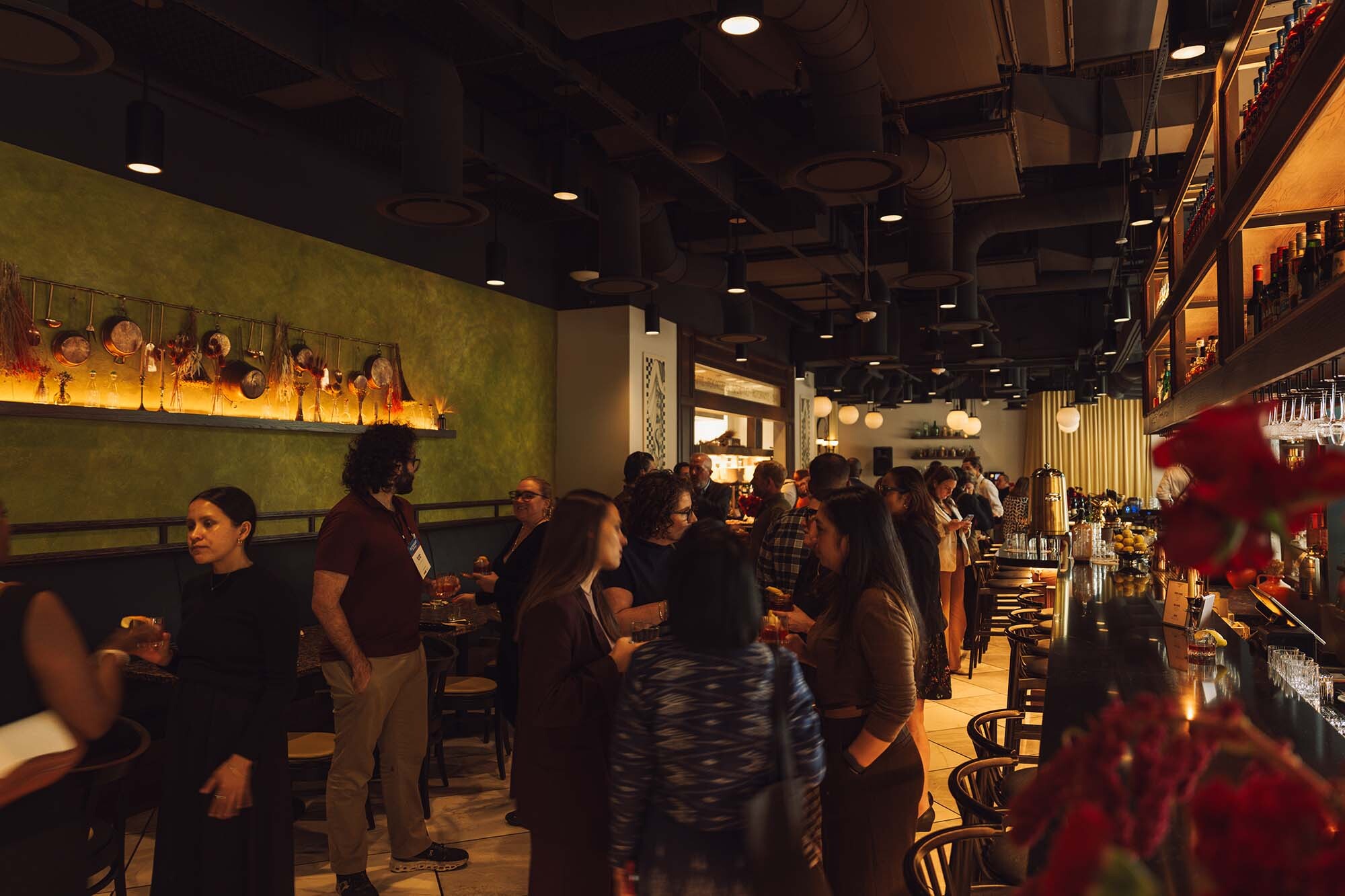
Getting 30 restaurant owners and managers to step away from their dining rooms for two days is itself an accomplishment. Between staffing schedules, balancing books, and maintaining regulars, today’s restaurant operators have more than their fair share of work cut out. But in late September, inside The Line DC, a 110-year-old former church in Adams Morgan, these operators found a reason to take a beat, take a breath, and learn a few things along the way.
The occasion was the first in-person convening of Restaurant Academy, a new leadership development program from American Express and Resy, in partnership with the National Restaurant Association Educational Foundation. The cohort came from all over: a Somali restaurant in Oregon; a pizza tavern in California; an inn and restaurant in southern Vermont. Some had been open for less than a year. One had been at it for 39.
For two days, they heard from four people who have, by most measures, figured it out: Gregory Gourdet of Kann in Portland, now also culinary director of Printemps New York. Victoria James, partner at Gracious Hospitality Management, the group behind COTE and COQODAQ. Mashama Bailey of The Grey in Savannah and L’Arrêt by The Grey in Paris. And Nok Suntaranon of Kalaya in Philadelphia. Accolades are in no shortage among this crew: seven James Beard Awards and a Michelin Sommelier of the Year title.
The conversations ran from cash flow to labor percentages to what to do when a table’s dinner conversation crosses a line. But the same idea kept surfacing, from four very different kitchens: the guest experience starts with how you treat your team.
Here’s what we heard.
1. A policy only works if you use it.
At Gracious Hospitality Management, any employee can say two words at any time, no questions asked: Code Blue. A manager steps into the section or onto the line, pulls them out of the situation, and sorts out what happened afterward.
The name of “code blue” isn’t what matters, James said. The follow-through is. “If you have a policy in place, like in a handbook, but you don’t actually do it, doesn’t really matter. It’s like an empty promise.” The first time a server called it, the whole team stopped to watch what leadership would do.
Not every Code Blue ends neatly. Around the 2020 election, a server called one because of a table’s political conversation. Leadership investigated and decided the server still had to serve the table. The server’s takeaway, in James’s retelling: “I don’t have to like the person I’m serving, but I have to respect them as a guest.”
The debrief always happens in private, never in front of guests or colleagues. James asks the employee to walk her through it, because in her experience, “their instinct is always right.” After all, she added, you probably didn’t hire someone with bad instincts.
2. The team is number one.
Gourdet left his hotel job on the last day of 2019, which meant he spent 2020, along with everyone else, rethinking how restaurants work. When he built Kann, he built it without walls. Front and back of house can see each other from anywhere in the room, and everyone gets the same share of tips. (He was quick to note that tip laws vary by state, so this won’t work everywhere).
Fine dining, where he came up, has long run on the idea that the guest comes first. “But I think we’re at a place where we realize we have to treat our team just as equally as we treat our guests,” he said.
That choice came with a cost, and he didn’t skip it. Within Kann’s first year, much of the original service team left for restaurants where servers earn more under traditional tip structures. He rebuilt with younger staff who had never worked any other way. The transition was painful, he said, but the team he has now believes in the model.
He also doesn’t ask his team to do anything he wouldn’t. During Kann’s first year, he spent his 46th birthday washing dishes. Alone.
3. One open door isn’t enough.
When COTE opened in 2017, James started free weekly wine classes for everyone on staff: dishwashers, cooks, servers, hosts. She expected the classes to sell more wine. They did. What she didn’t expect was a dishwasher named Freddy telling her that before the classes, the only way he was able to experience wine was when the dirty wine glass would come from the dish pit and he would smell them.
Freddy went on to become a busser, then a server, then a sommelier, then a manager. That arc became the blueprint for Wine Empowered, the nonprofit James co-founded with two colleagues to offer tuition-free wine education to hospitality workers.
The lesson, she said, is that education without a next step teaches people the wrong thing. “You gotta kind of keep opening the next door and opening the next door.” After the class, hand over a responsibility, like the weekly wine inventory. Then show them how orders get placed with vendors. Then the next thing. Otherwise, she said, they’re “like the Energizer bunny, just going into the wall.”
Suntaranon runs Kalaya the same way. When servers left, she pushed her team to promote runners instead of hiring from outside. One runner, Faith, kept asking to become a server until she got the job. “I don’t need any more accolades,” said Suntaranon, who has two James Beard Awards. “As long as my people are happy and I can empower them, that’s enough for me.”
For Gourdet, it’s simple math. If operators don’t develop their own people, there won’t be anyone to fill the next sous chef and manager jobs. Kann promoted one of its cooks to sous chef this year, after he spent months building the stamina for long kitchen shifts.
4. Your managers should know the numbers as well as you do.
When Bailey moved to Savannah to open The Grey, she was 40 and had spent four years as a sous chef at Prune, Gabrielle Hamilton’s 30-some-seat restaurant in New York. That was the scale she knew, so that’s the scale she pictured. But with both bars, The Grey seats 112, and a room that size takes far more staff, systems, and financial planning than she’d bargained for. She came in focused on the story she wanted to tell on the plate, not the business it would take to tell it. “I wish I would have sort of taken it a little bit more as, okay, this is more of a business and less of a passion project,” she said.
Her first chef at The Grey was a lot like her: passionate, food-first, and not much interested in the financials. That was the era of heavy overtime. Today, The Grey’s chef, Erik Carreno, owns inventory and the P&L. “He creates a menu and a schedule that reflects that and he takes ownership of that,” Bailey said, which leaves her free to focus on the food and the story. That’s what she looks for in a chef today: someone with ambitions of their own. “I want a chef to work with me that wants their own restaurant.”
Every weekly manager meeting covers the same three things: P&Ls, guest reviews, and culture. Someone leads each, and the group names which corner of the business needs extra support that week.
Suntaranon is even blunter about her own limits. “If you give me $100,000, I burn $200,000,” she said. So she leans on a strong accountant, a weekly financial report, and a CFO. “I learn about my business by looking at the report.” Her one regret: not bringing on a financial advisor sooner.
5. Save for a rainy day. Then hire a good lawyer.
Four years after The Grey opened, Bailey and her team launched Grey Market, a fast-casual spot two blocks away with house-made bread, smash burgers, and cookies. Savannah loved it. It also carried a full roster of bakers, chefs, and managers. When COVID emptied downtown, the business couldn’t cover its fixed salaries.
“Thinking like, okay, [the money’s] going to come in, it’s going to come in, and not really thinking about the fact that we should be saving for a rainy day, I think was the biggest learning curve for us,” she said.
So for L’Arrêt in Paris, they saved first. Then the building’s other tenants filed a cease and desist mid-renovation. Construction stopped for a year and a half, and the renovation fund went to legal fees. A restaurant meant to open in six months opened two years later.
Her advice: know your cash flow, know where the pitfalls are, and have an escape route. Or, more succinctly, “Cash and lawyers, I think, are the two things that you need to secure.”
Suntaranon got the lawyer part right from the start. When Kalaya moved into its 145-seat Fishtown home with new partners, she wrote protections into her contract: no one from her original team can be let go without her approval, and she has the final word on ingredients and food. “My contract is ironclad,” she said.
6. If things cost more, charge more.
When Kalaya grew from a 35-seat BYOB into its larger home, one of Suntaranon’s partners worried her food was too spicy, too labor intensive, too much to sustain at that scale. Suntaranon’s answer drew on two decades as a flight attendant with Thai Airways. She’d served 380 passengers on a Boeing 747, she told him. A 140-seat dining room she could run with one eye closed.
She brings the same confidence to pricing. Kalaya’s Southern Thai cooking is labor-intensive, and she doesn’t apologize for it. “I know my food is good,” she said. “Our labor is going to be high because our food is labor-intensive.” Since no one else makes her dishes, she prices them as she sees fit.
When guests kept ordering the same few curries and missing the rest of the menu, she introduced a tasting menu, despite some hesitation from her partners. Sales rose 20 percent, and Kalaya paid back its investors in three and a half years.
One operator in the audience asked how to get labor down to the 15.5 percent his boss wanted when his scratch kitchen was running at 16.5. Suntaranon didn’t hesitate. “If it’s much higher, then raise the price,” she said. And if the boss still wants cuts, invite him to spend a shift in the kitchen and see how the food gets made.
Her bottom line: “Things cost more, charge more.”
7. Your best-seller has an expiration date.
Most restaurants guard their most popular dish. Kalaya and The Grey both take it off the menu, which is how Bailey and Suntaranon discovered, on stage, that they run their kitchens the same way.
“We don’t want to be another restaurant,” Suntaranon said. “We want to be the restaurant.” Retiring a hit pushes guests to explore the rest of the menu. Sometimes the motivation is more practical. After one night on the wok station cooking the same dish over and over, she decided: “No, no, no, no, we have to say goodbye to this.”
At The Grey, a chicken country captain went viral and became the dish everyone came for. Bailey brings favorites back seasonally, but she watches her staff for the cue to retire one. “You start to see like this glazed-over look in the staff’s face when you’re talking about these dishes,” she said, “and that’s when you realize you have to change it because now your team isn’t engaged.”
8. The hard conversations are part of the job.
Late last year, three and a half years after opening, Kann slowed down for the first time. Gourdet cut a day of service, went from three turns a night to two, and laid off about 12 people between Christmas and New Year’s Eve. “I was waking up having nightmares about it,” he said.
For weeks afterward, the staff braced for bad news every time he called a meeting. Quarterly one-on-ones helped rebuild trust. Looking back, he said, the team that stayed is happier, in part because the cuts also addressed a few people who had been dragging down the culture.
James handles exits by letting the other person talk first. “Usually it has nothing to do with us,” she said. Then she reaches for what she calls a magic phrase: “Sounds like.” As in, sounds like you have a lot going on outside of work. Sounds like you could make more money, with fewer hours, at a suburban steakhouse. Naming the mismatch out loud, she said, tends to clear the fog for everyone.
And what about the loyal staffer who’s been around for six years and has no interest in growing? One operator asked exactly that. James’s advice was to ask what’s in it for them, then be honest about the answer. “What got you here is not going to get you there,” she said, “and for them too.” Gourdet offered a counterpoint: some long-tenured employees are simply consistent, and consistency has real value. The ones to worry about are the people holding the team back.
And yes, you’re allowed to have fun.
Asked how she keeps any kind of balance, James pointed out what everyone in the room already knew: restaurant work delivers a small dose of trauma every single day. (It’s why some industry folks can’t watch The Bear, she noted. It’s too real.) Then she shared something she’d recently learned. “Psychologically, the opposite of trauma is play.”
Her prescription is to laugh, crack jokes, and make sure your team gets to have fun, too. It was a fitting note to end on. Over two days, four very different chefs described the same playbook: build the structure, invest in the people, and the guest experience will follow. Ideally, with a few laughs along the way.
Restaurant Academy continues virtually through March 2027, with live sessions on building high-performing teams, leading through peak operations, creating memorable guest experiences, and managing profit.