Quick Answers
- Restaurant Academy is a leadership development program from American Express and Resy, in partnership with the National Restaurant Association Educational Foundation, that kicked off with two days of in-person sessions in Washington, D.C. for a cohort of 30 restaurant owners and managers.
- Three participants at very different stages, from a first-year founder to a 39-year veteran, said they came first and foremost for the community and connections with fellow operators.
- Their top takeaways were practical basics: regular staff meetings, weekly inventory, written training, employee handbooks, and mission statements.
A first-year founder, a 10-month-old restaurant, and a 39-year veteran walk into a leadership program. Here’s what they were looking for, and what they’re bringing home.
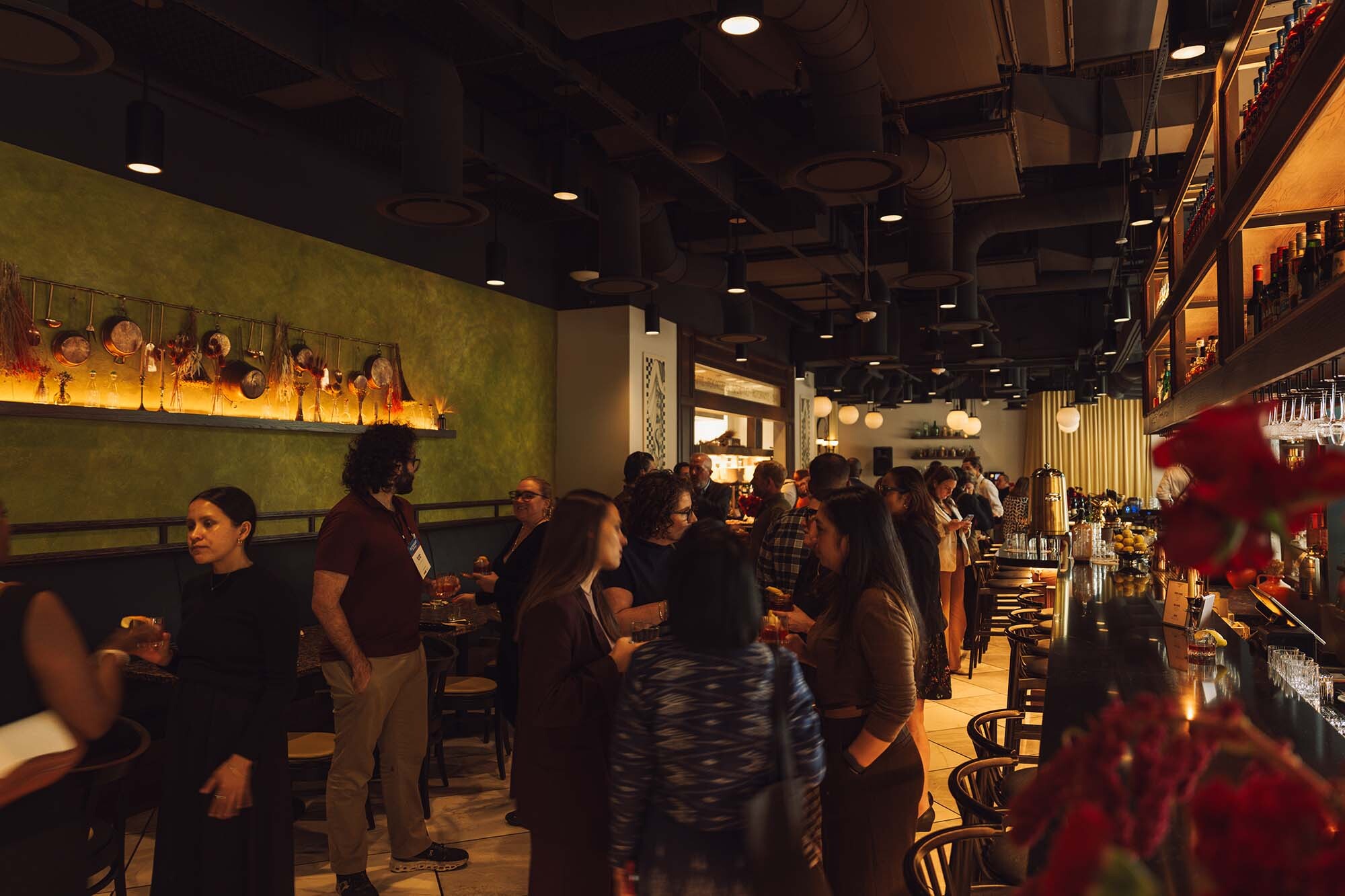
In the morning buzz of this year’s Restaurant Academy, fueled in no small part by coffee and excitement, 30 restaurant operators began to fill in the seats of the Line DC’s conference room. At one table near the center of the room, two operators were already deep in conversation – one had opened his restaurant about a year earlier. The other had been in the business for nearly four decades.
That table was a snapshot of the whole cohort, which came to Washington, D.C. in late September for the first in-person sessions of Restaurant Academy, a new leadership development program for restaurant owners and managers from American Express and Resy, in partnership with the National Restaurant Association Educational Foundation. Its members were at every stage imaginable. Some were still figuring out how to schedule a staff meeting. Others had been running restaurants since the 1980s.
We caught up with three of them over the two days: Bruce Haupt of The Landgrove in Vermont, Ashwaq Omar of Kismayo in Oregon, and Rhodney Lloyd of Chick N’ Friends in Maryland. We first asked each why they’d come and what they were taking back. Their restaurants, backgrounds, and years in business couldn’t be more different. Their answers were almost identical: the people.
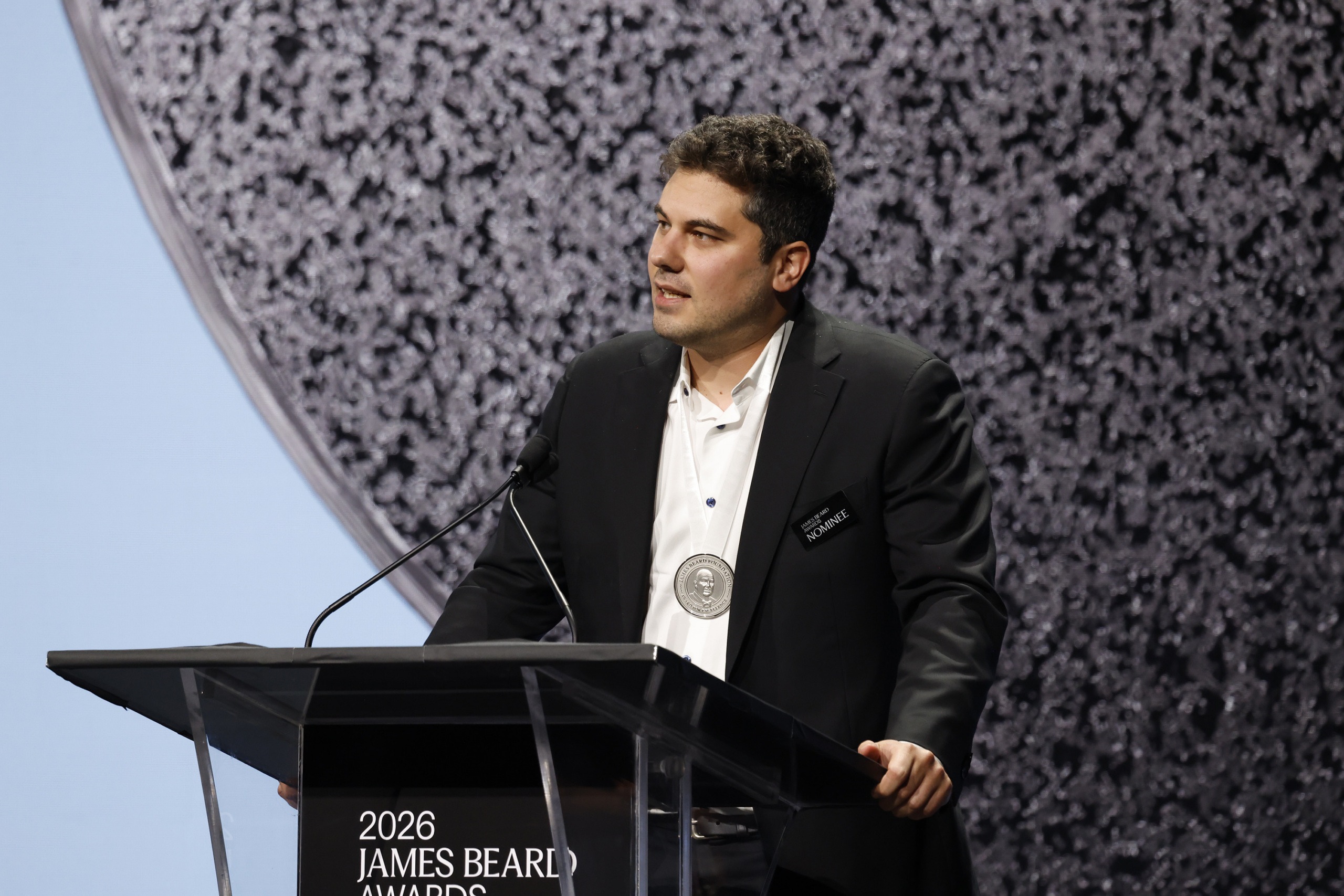
Bruce Haupt, The Landgrove (Landgrove, Vt.)
Why he came: Haupt and his team opened The Landgrove about a year ago, and none of them came from hospitality. Separately, Haupt had joined a mastermind group for restaurant owners, a paid program that meets virtually, and found it “incredibly impactful.” So when the Restaurant Academy email landed, the math was easy. “This is the type of thing I’m already paying for that I value,” he said. The difference was the in-person part: “the community, the relationships that you form in a place like this. Really powerful.”
He’s a big believer in what he calls “emergence,” the good things that come out of random connections. He also wanted help with what he called “real blocking and tackling” on systems. “We’re new,” he said, “and we still have so far to go.”
What he’s taking home: Seven things, written in a notebook for the train ride home. Near the top: regular daily and weekly meetings. That one has been surprisingly hard, he admitted. In his previous career, one-on-ones and daily standups were routine. In a restaurant running seven days a week across multiple shifts, “it’s almost like code switching.” His realization: stop waiting for a time that works for everyone, because there isn’t one. Just do it.
Also on the list: finishing the employee handbook he’d already started, and building an inventory-tracking app after hearing another operator call weekly inventory the single biggest driver of profitability. “I already know that’s possible,” he said. “I can just go back and I can do it myself.”
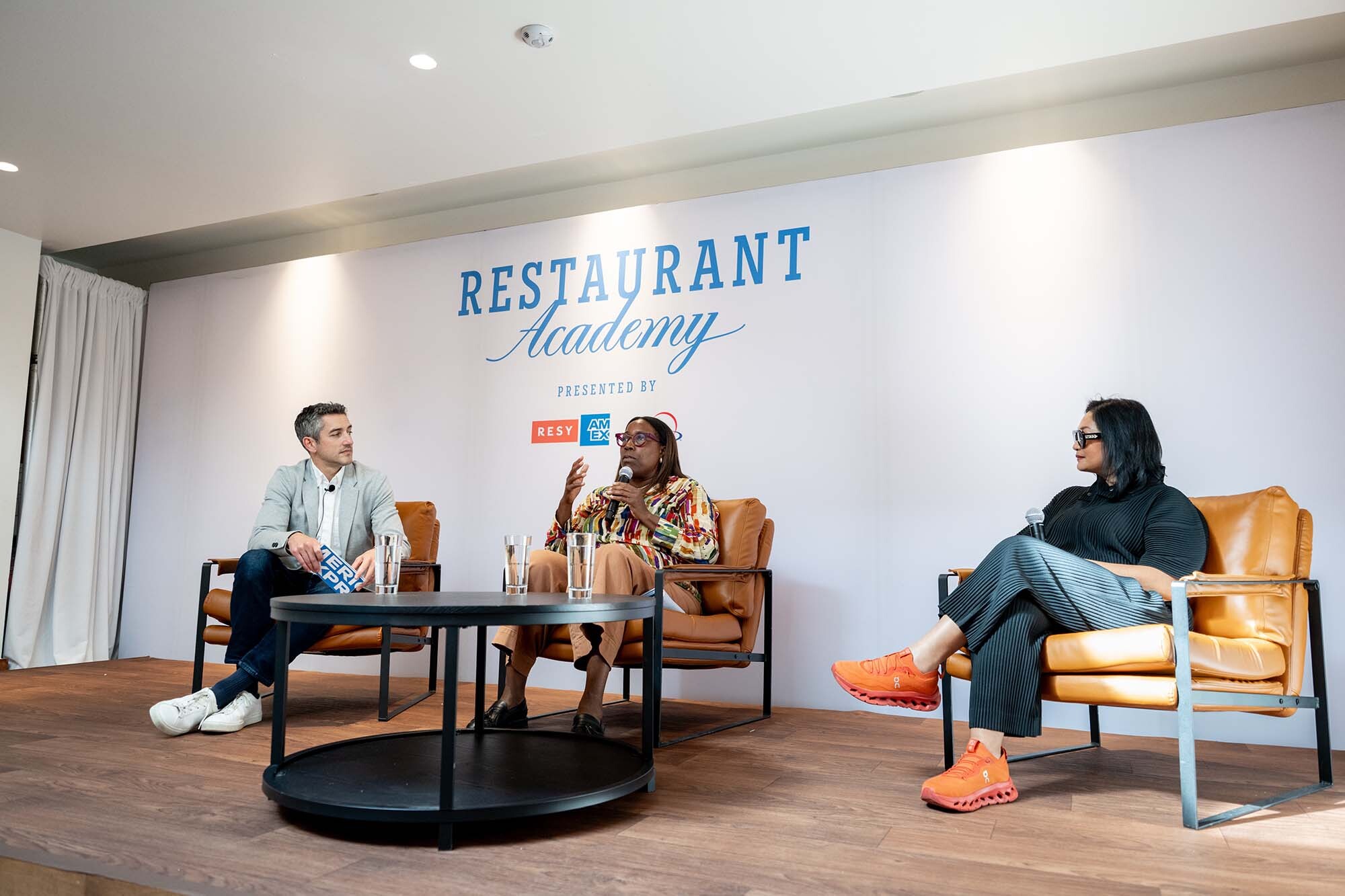
Favorite session: The panel with Gregory Gourdet and Victoria James. “That was awesome to hear the stories,” he said, and he left with a book to buy.
As for the rest of his week? A marathon – literally.
Ashwaq Omar, Kismayo (Portland, Ore.)
Why she came: Omar opened Kismayo, a Somali restaurant, about 10 months ago. She’d held leadership roles in both the private and public sectors, but never in a restaurant. Early on, she reached out to Oregon’s small business office looking for anywhere she could learn. They sent her the Restaurant Academy application a day before it closed.
She applied anyway, and she was blunt about why. “I cannot even put value on six months’ worth of training,” she said, “especially as I’m starting out.” What she wanted was a way to translate the leadership experience she already had into an industry that runs on its own rules, and to build something that lasts. “I truly believe in what I have,” she said.
Her biggest question going in is one plenty of owners with decades in the business are still asking: How do you step back from the day-to-day and still run a successful business?
What she’s taking home: Documentation. Written training. A written mission statement. And a short list of resources other operators shared at her table, including restaurantowner.com, which she plans to dig into. Day one alone, she said, was full of “so many different nuggets, not only from the people in the room,” most of them about the importance of systems.
Favorite session: The roundtables and breakouts, where operators worked through problems together. “I don’t know if I’ve ever seen that before,” she said.
And the reason she opened Kismayo in the first place? “I wanted people from all different backgrounds to feel welcome and step into our restaurant and enjoy some of our cuisine.”
Rhodney Lloyd, Chick N’ Friends (Columbia, Md.)
Why he came: If Haupt and Omar were the cohort’s newcomers, Lloyd was its elder statesman. Chick N’ Friends has been around for nearly four decades, and Lloyd came to the business sideways, from the equipment world, selling commercial pressure fryers before he ever ran a restaurant. He describes his background as infrastructure: knowing what it takes to make the same food, the same way, every day.
He came to Restaurant Academy for the network. “I can talk to folks from zero to 100,” he said, meaning everyone from operators just starting out to people who’ve been at it as long as he has. He’s especially interested in the newer owners: how they plan to make it, and what they’ll do if it doesn’t work out.
What he was hoping for: “Well, first, to listen.” A lot has changed since he started, he said, and social media in particular has made it harder, not easier, for restaurants to connect with the people they serve. After 39 years, he wanted to hear how everyone else is handling it.
Which may be the most useful advice anyone in the room got all week. Thirty-nine years in, the most seasoned operator at the table still came to listen.
What they had in common
Three restaurants represented three very different starting points. But a few threads ran through every conversation.
They came for each other. All three were drawn more by the people than by the curriculum. Haupt called the relationships “really powerful.” Omar’s favorite part was the roundtables. Lloyd came for the network. The content matters, but the room mattered more.
They’re writing things down. Handbooks, training manuals, mission statements, welcome packets for new hires. Much of what these operators are taking home isn’t new information. It’s finally putting on paper what’s been living in their heads.
The basics are the hard part. Nobody’s top takeaway was a radical new idea. It was scheduling the weekly meeting, doing the weekly inventory, and writing the handbook. As Haupt put it, a lot of it is the “just do it stuff.”
The in-person portion was only the start. Over the next six months, the cohort continues virtually, with modules and live sessions on building teams, elevating the guest experience, and managing profit, before graduating in March 2027. Haupt, for one, sees that as where the real depth comes in. Two days, he said, is only enough to scratch the surface. The relationships are what will carry them through the rest.